

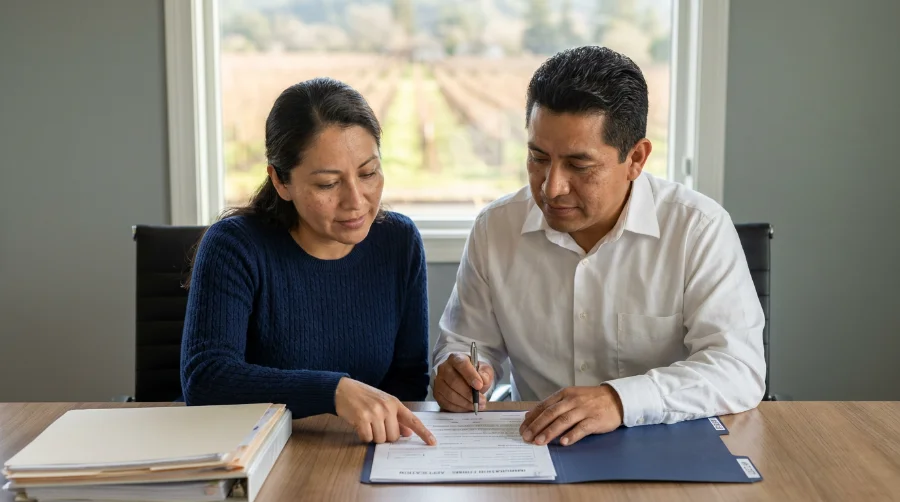
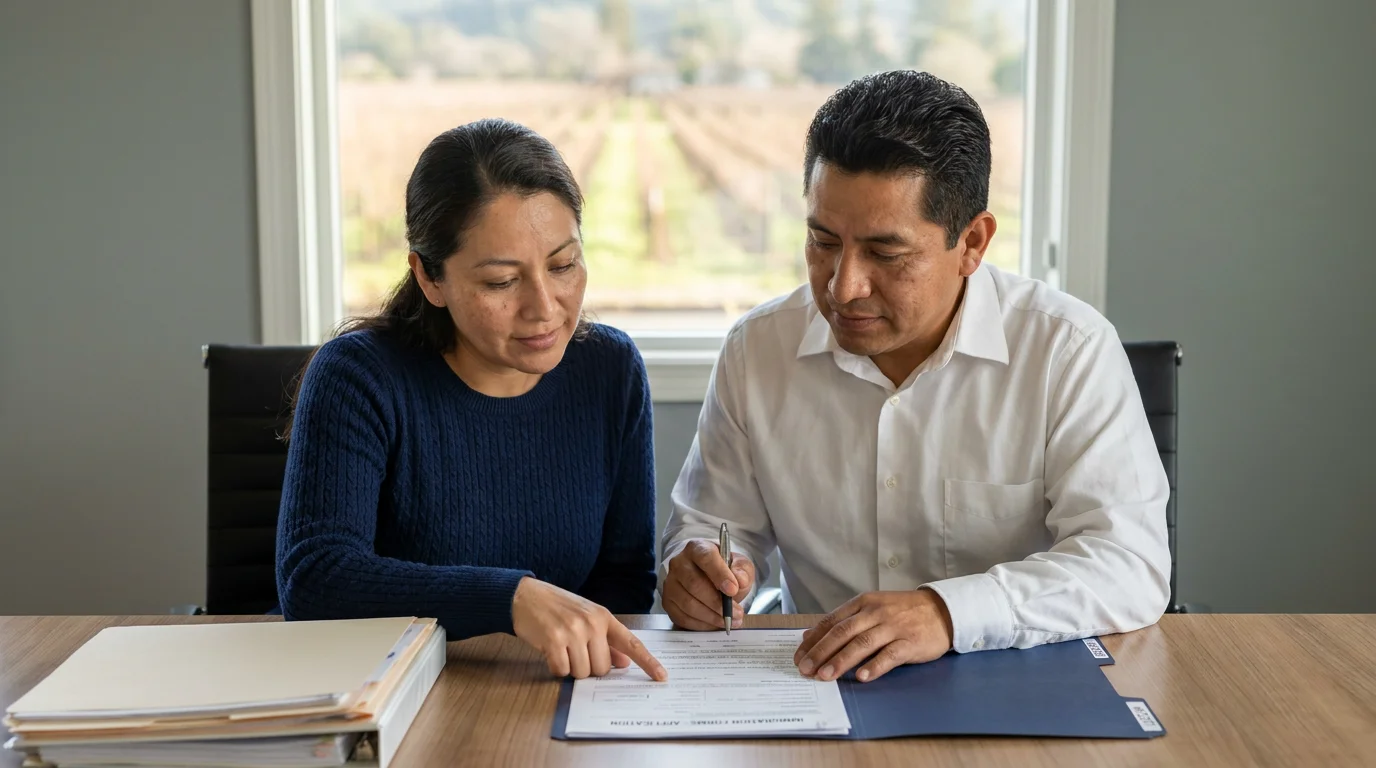

Key Takeaways:
- A marriage green card interview usually turns on consistency, not perfect recall, because USCIS is checking whether your answers match the story already in your file.
- Preparation starts with the case record: a shared timeline, updated civil and financial documents, and clear proof of how your day-to-day life fits together.
- Cross-border travel, separate addresses, or time apart do not sink a case by themselves, but they can lead to extra questions, RFEs, or even denial when the file leaves those facts unexplained.
Most couples walk into a marriage green card interview trying to remember the right answers. The interview goes better when they focus on something simpler: telling the same true story, consistently, in every form, document, and answer. According to USCIS policy, the interview is a verification step, not a memory test. Officers are checking whether what you say matches what you filed. If you and your spouse have organized the real facts of your shared life clearly, that consistency does most of the work for you.
KPB's immigration attorneys work with couples through every stage of this process. Schedule a consultation to review your case before the appointment.
What Officers Look For at a Marriage Green Card Interview
The core question a USCIS officer is answering is straightforward: is this a real marriage? According to the USCIS Policy Manual, officers weigh whether the couple's evidence is detailed, specific, and consistent across the entire file. Understanding what draws scrutiny helps couples prepare the right way.
The Bona Fide Marriage Standard
Officers are not evaluating the strength of your relationship. They are checking whether the relationship you describe in the room matches the relationship already documented in your file. Your petition, your supporting evidence, and each other's answers all need to point to the same facts. A mismatch, even a small one on a date or an address, raises a question the officer has to resolve before the case can move.
The Details That Get the Most Attention
Officers focus on everyday facts: when you met, where each of you has lived, how your finances and household decisions work, and whether both spouses tell the same story without prompting. For cross-border couples, the questions that most often surface gaps are the ones about shared addresses, travel history, and how the relationship continued across distance. Answers drawn from real experience hold up under follow-up questions. Rehearsed answers often do not, because a follow-up question is not something you can rehearse for.
Cross-Border Factors Are Not Automatic Red Flags
Time apart, travel between countries, and different home addresses do not make a case weak on their own. What creates doubt, according to CLINIC's practitioner guidance, is when those facts are unexplained or poorly documented. A clearly organized file that accounts for cross-border history answers the officer's questions before they are asked, and that is a real difference in how a case moves.
How to Prepare Your Documents and Timeline
The most useful thing a couple can do before a marriage green card interview is not rehearse answers. It is to build one clear picture of the relationship that holds up across every form they filed, every document they submit, and every question they answer in the room. Consistency is the goal, and that starts with your paperwork.
For cross-border families, this step takes extra attention. Time spent living in different countries, addresses that changed during the petition process, or travel gaps that never got documented can all create questions that a well-organized file would have answered in advance. KPB's family-based immigration guide walks through how these details fit into the broader case structure.
Here is what to pull together before your appointment:
- Build a shared relationship timeline that covers when you met, how the relationship developed, every address where either spouse has lived, travel in and out of the U.S., and any major life events. This timeline should match the dates and facts in your petition and application.
- Gather identity and civil records for both spouses, including passports, birth certificates, and your marriage certificate. The USCIS I-485 evidence checklist outlines the specific documents required, and any foreign-language records need certified English translations.
- Bring joint financial and household records such as shared bank statements, lease agreements, utility bills, insurance policies, or tax returns filed together. These show the daily reality of the marriage, not just the ceremony.
- Include updated evidence for anything that has changed since you filed, such as a new address, a new employer, or recent travel. An outdated file can create confusion even when the marriage itself is straightforward.
- Explain time apart clearly with documentation. If spouses have lived in different countries at any point, bring records that show why and how the relationship continued, travel records, communication logs, and photographs with dates. The State Department's consular guidance also notes that original long-form documents and certified translations are expected at the consular stage for cases processed abroad.
The point of this preparation is not to build a performance. It is to review your own case the way an officer will, looking for anything that looks inconsistent or unexplained, and filling those gaps before the appointment. Our immigration documents checklist breaks down each category in more detail if you want a step-by-step reference.
When both spouses can answer plainly from the same true set of facts, the interview reflects that.
Prepare the Case, Not Just the Interview
By the time a couple sits down for a marriage green card interview, the officer has already read the file. The interview is the moment they check whether what is in that file holds up in person. A complete, well-organized case file does more work in that room than any rehearsed answer, because the story it tells is already on record before anyone opens their mouth.
Family-based immigration cases, especially those that cross borders or involve time apart, need that kind of preparation from the start. KPB Immigration Law Firm works with couples through a petition strategy, evidence review, interview preparation, and any follow-up responses that come after the appointment. If your marriage green card case is coming up, schedule a consultation to review your case file before the interview, not after.

